Lease Options Explained: Control Property Without Buying It
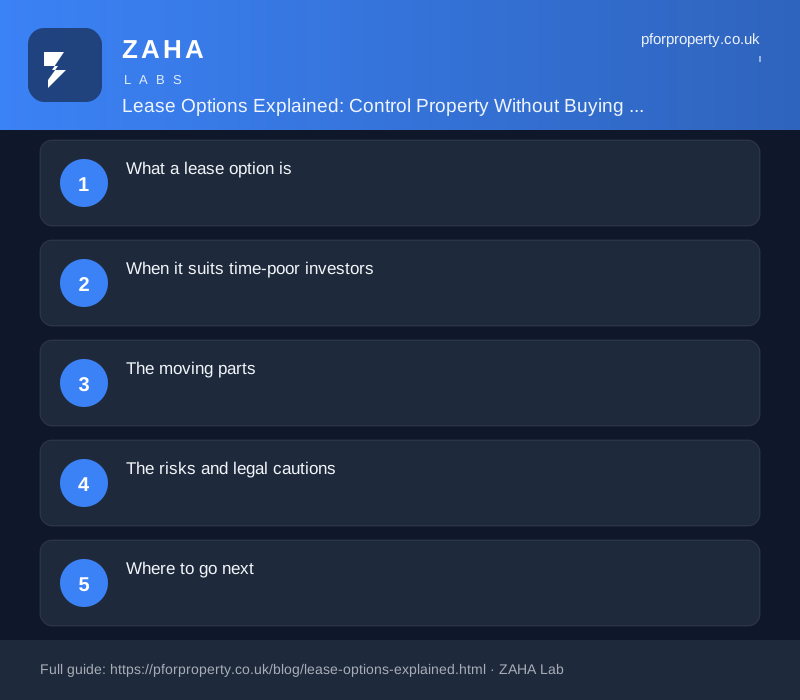
- You pay an option fee plus a monthly payment, and can buy within a set term.
- It suits time-poor or capital-light investors when an owner can't sell outright today.
- Four moving parts: option fee, monthly payment, agreed price and option term.
- It's legally complex — always use a solicitor experienced in lease options.
A lease option gives you the right — but not the obligation — to buy a property at an agreed price within a set period, while you control and usually rent it in the meantime. For a busy professional who is capital-light or wants exposure without tying up a big deposit, it can be a lighter-touch way in. In plain terms: you get the benefits of controlling a property now, lock in a purchase price for later, and keep the choice of whether to actually complete.
It's one of the more advanced buying techniques, and one of the most misunderstood. Here's how it works, when it fits, and why a solicitor is non-negotiable.
What a lease option is
Two things are happening at once. The lease part lets you take control of the property and rent it out today. The option part is your contractual right to buy it later, at a price fixed now, at any point before the option expires. If the deal still makes sense when the time comes, you exercise the option and complete; if it doesn't, you can let it lapse.
Crucially, you control the property without having bought it. You haven't paid a full deposit or taken on a mortgage to take possession — you've paid a fee for the right to buy, and you're paying the owner monthly while you hold it.
When it suits time-poor investors
Lease options can suit investors who are short on time or capital but want to control a cash-flowing asset without funding a full purchase upfront. They tend to work where an owner is willing but unable or unwilling to sell outright today. Common examples include:
- An owner in negative equity who can't sell for enough to clear their mortgage now.
- A landlord who wants income today and a clean exit at a known price later.
- A reluctant accidental landlord who'd happily hand over control to someone reliable.
For the right investor and the right owner, it's a way to put a deal together that a straight purchase simply couldn't.
You're buying time and control, not the building — yet. The skill is making sure the property cash-flows while you hold it and the agreed price still works when you come to buy.
The moving parts
Every lease option comes down to four numbers you agree with the owner:
- Option fee. An upfront payment for the right to buy — sometimes nominal, sometimes more substantial.
- Monthly payment. What you pay the owner each month while you control the property, usually set so your rental income covers it with a margin.
- Agreed purchase price. The fixed price at which you can buy, locked in now for completion later.
- Option term. The window within which you can exercise the option — often several years.
Get these four right and the deal can work for both sides. Because the maths spans rent, the monthly payment and an eventual purchase, it pays to model the whole thing before you sign — our deal analyser helps you check the income covers the payment with room to spare and that the agreed price still makes sense as an eventual purchase.
The risks and legal cautions
This is where lease options demand respect. The main risks are:
- Legal drafting. A weak agreement can leave you exposed or unenforceable. The structure has to be precise.
- Owner default. If the owner stops paying their own mortgage or breaches their lender's terms, your position can be threatened — even though you've kept your side.
- Lender and consent issues. The owner's mortgage terms may restrict this kind of arrangement, so the position needs checking, not assuming.
- Price risk. If values fall, the agreed price could end up above what the property is worth when you come to buy — at which point you may choose not to exercise.
Because the rules around lease options are nuanced and the agreements are complex, you must use a solicitor experienced specifically in lease options. Do not rely on a template or a course handout. This is one technique where cutting the legal corner can undo the entire deal, so treat professional advice as part of the cost of doing it properly.
Where to go next
Lease options are an advanced way to control property, but the underlying mindset — paying less than full value for more than the headline suggests — is the same one behind our explainer on below-market-value buying. Understand the fundamentals first, model every deal carefully, and bring in a specialist solicitor before you commit to anything.